

 Imaging and videography
is on the brink of getting into their next generation with the introduction of the
world’s smallest gigapixel camera which is at present the size of a small
cabinet weighing around 45kg.This monster of cameras can capture an image with
1000times more detail than a Nikon D800 which has 40megapixel.
Imaging and videography
is on the brink of getting into their next generation with the introduction of the
world’s smallest gigapixel camera which is at present the size of a small
cabinet weighing around 45kg.This monster of cameras can capture an image with
1000times more detail than a Nikon D800 which has 40megapixel.The camera was developed by a team led by engineer David Brady and Michael J. Fitzpatrick, professor of Electric Engineering at Duke's Pratt School of Engineering, along with scientists from the University of Arizona, and the University of California.
They received funding from DARPA - the United States Defense Advanced Research Projects Agency.
This prototype can record a gigapixel or 1,000 megapixels image in 1/10th of a second. Now that’s an image!
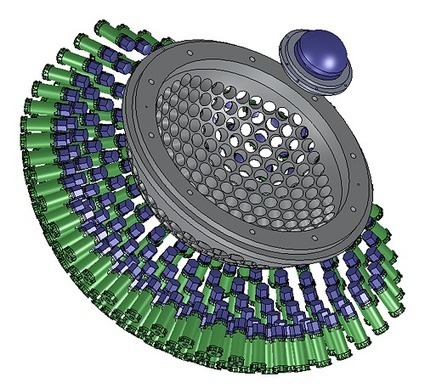
These electrical engineers(proud to be one) have
integrated 98 micro cameras each of 14Megapixels which can focus on selected
points of the image. The engine stitches the images after the capture giving it
a stupendous clarity on the subject. The cost of one such machine so called
camera is $100,000 to $250,000(Rs.50,00,000 to Rs.1,25,00,000).
Practically what they
want to say is ‘You can capture priceless images’ – Navincz
But as the
electronics improve, the price should become affordable for professional and
serious amateur photographers within about five years, followed soon thereafter
by hand-held gigapixel cameras entering into widespread use.
 The technology could
be used, for example, to stream sporting events over the Internet -- enabling
viewers to zoom in and watch the game from whatever perspective and resolution
they choose.
The technology could
be used, for example, to stream sporting events over the Internet -- enabling
viewers to zoom in and watch the game from whatever perspective and resolution
they choose.
Similarly, cameras
mounted in game parks or at scenic lookouts would allow online tourists to
examine a scene in much more detail than if they were actually there.
Gigapixel cameras may
transform the challenge in photography into mining out images. Basically images
are few moments intertwined in a picture which gets better and better as the
moments reduce as noise reduces in the image.
This camera shooting a Gigapixel image in 1/10th of a second would deliver so much data that photographers would cherish every inch of picture like a cake in digital form.
This camera shooting a Gigapixel image in 1/10th of a second would deliver so much data that photographers would cherish every inch of picture like a cake in digital form.
Image source :cam

 Posts
Posts


0 comments:
Post a Comment